Atopic Dermatitis Symptoms and Treatments

Abstract: Atopic dermatitis(AD) is the chronic relapsing inflammatory dermatosis with severe pruritus and recurrent rash, greatly affecting patients’ quality of life. This disease coexists with some atopic disorders(e.g. hypersensitive rhinitis, asthma etc), showing abnormal features of immune system. Urgent treatment demands for moderate and severe patients are relief of persistent pruritus, rapid control of skin …

Read More

Fluorescence Compensation in Multicolor Flow Cytometry

Abstract: Fluorescence spectral overlap usually leads to signal crosstalk in multicolor microscope and flow cytometry, referred to as fluorescence leakage. Fluorescence compensation is the key step in multicolor flow cytometry, and can ensure data accuracy, reliability and authenticity via correcting spectral overlap among different dyes and removing signal interference. Keywords: Fluorescence Compensation, Multicolor Flow Cytometry, …

Read More

Autofluorescence in Flow Cytometry

Abstract:     Autofluorescence is the natural fluorescence produced by irradiation of specific molecules in cells and tissues at specific wavelength. Common endogenous fluorescent substances are NADH, Flavin coenzyme, vitamin and proteins containing aromatic amino acids. Autofluorescence also occurs in extracellular collagens, lipofuscin, plants and alga(e.g. chlorophyll, flavone and carotenoids). Interference with signal detection in flow …

Read More

IL-23 Pathway in Autoimmune Diseases

Abstract: Interleukin-23(IL-23) is the important pro-inflammatory cytokine of IL-12 family, mainly produced by macrophages and dendritic cells. IL-23 consists of IL-12p40 and IL-23p19. Binding with IL-23 receptor activates cell signaling and promotes proliferation and differentiation of Th17 cells, which is very important for autoimmune diseases. Thus, IL-23 pathway promotes immune response via activating immune cells …

Read More

Th17 Markers Flow Cytometry

Abstract: Th17 cells are the important subgroup of CD4+ T cells. Pro-inflammatory effects play a key role in autoimmune diseases and inflammatory response. Unlike Treg cell for regulating immune response, Th17 cells mediate immune activation via secreting cytokines(e.g. IL-17). Th17 markers flow cytometry can significantly detect proportion and function of Th17 cells. Keywords: Th17 Markers, …

Read More

Flow Cytometry Protocol for Intracellular Staining

Abstract: Intracellular staining and molecular detection can help identification of cell subpopulation and status. Unlike traditional staining of antibodies on the surface, flow cytometry analysis of intracellular proteins requires for fixation and permeabilization of cells to achieve antibody-antigen binding. Flow cytometry mass spectrometry can detect cell surface markers and analyzes components in cells and nucleus. …

Read More

Pathogenesis of Cardio-cerebrovascular Diseases

Abstract: Cardio-cerebrovascular diseases(CVD Diseases) refer to ischemic or hemorrhagic diseases of heart, brain and all tissues, induced by dyslipidemia, atherosclerosis and hypertension etc. People over 50 years old often suffer from these diseases, featured with high incidence, disability and mortality etc. The quality of life of many patients is still restricted. If these symptoms appear(e.g. …

Read More

Flow Cytometry Applications in Cell Analysis

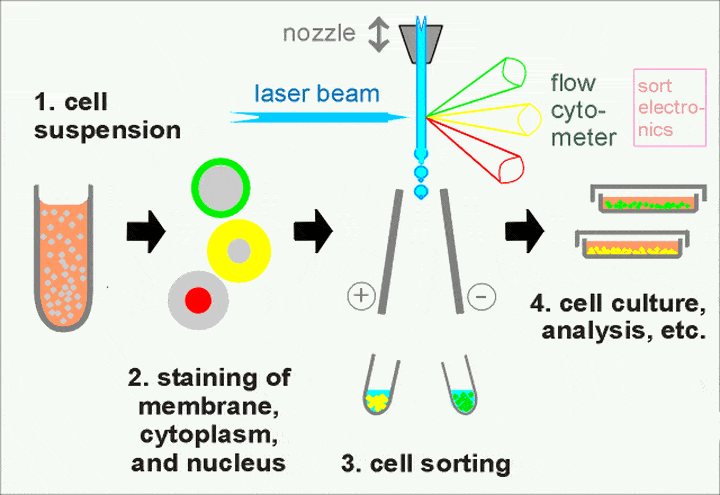
Abstract: Flow cytometry is the high-throughput and multi-parameter single-cell analysis technology based on fluorescence labeling and laser detection. Roles and applications in life science research and clinical diagnosis are very important. This technology quantitatively analyzes the phenotype, function and molecular level of a large number of cells. Flow Cytometry applications are specified in detail below, …

Read More

MEDICA 2025 Review

MEDICA was successfully held at Düsseldorf exhibition centre on Nov 20, which was considered as the largest and famous medical Expo. Over 5,000 exhibitors and 80,000 professionals from 70 countries attended MEDICA 2025. Thus, MEDICA connects global medical innovations with market demand. FineTest showed key products at this event and attracted attentions with innovation and …

Read More

Comparison between Different ELISA Method Steps

Abstract: Enzyme-linked immunosorbent assay(ELISA) was first found in 1971. ELISA performs the qualitative or quantitative analysis for trace substances in the sample. First, fix antigen or antibody on solid phase carrier(e.g. polystyrene well). Then, add enzyme-labeled antibody or antigen with high specificity. Wash off unbound components. Finally, add TMB substrate solution and observe the staining …

Read More

Product Comparison