


Abstract: Integrin α4 (ITGA4, also called CD49D) is the key subunit in integrin family. Binding with β1 or β7 forms functional heterodimer α4β1(VLA-4) and α4β7. Roles in adhesion, transport and migration of immunocytes are important. VLA-4 can also mediate leucocyte aggregation on activated endothelial cells. ITGA4 plays an important role in pathogenesis of various autoimmune diseases(e.g. multiple sclerosis, inflammatory bowel disease etc), and has become the key therapeutic biomarker.
Keywords: Integrin α4 (ITGA4), Autoimmune diseases, Tumor progression and metastasis, Targeted therapy, Integrin-mediated signaling
1. Distribution of ITGA4 Expression
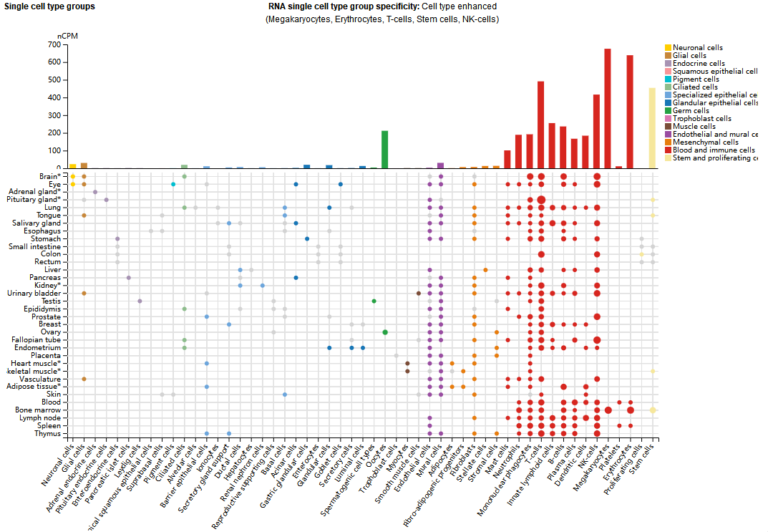
ITGA4 is mainly distributed in megakaryocytes, red blood cells, stem cells, NK cells and T cells. In T cell subsets, CD49D is mainly expressed in CD4+ and CD8+ T cell. In CLL patients (chronic lymphocytic leukemia), expression level of CD49D on CD4+ and CD8+ T cell surface are obviously higher than healthy control group. Thus, roles of ITGA4 in CLL immunopathologic process may be significant.
2. ITGA4 Signaling: From Affinity Modulation to Cytoskeletal Remodeling
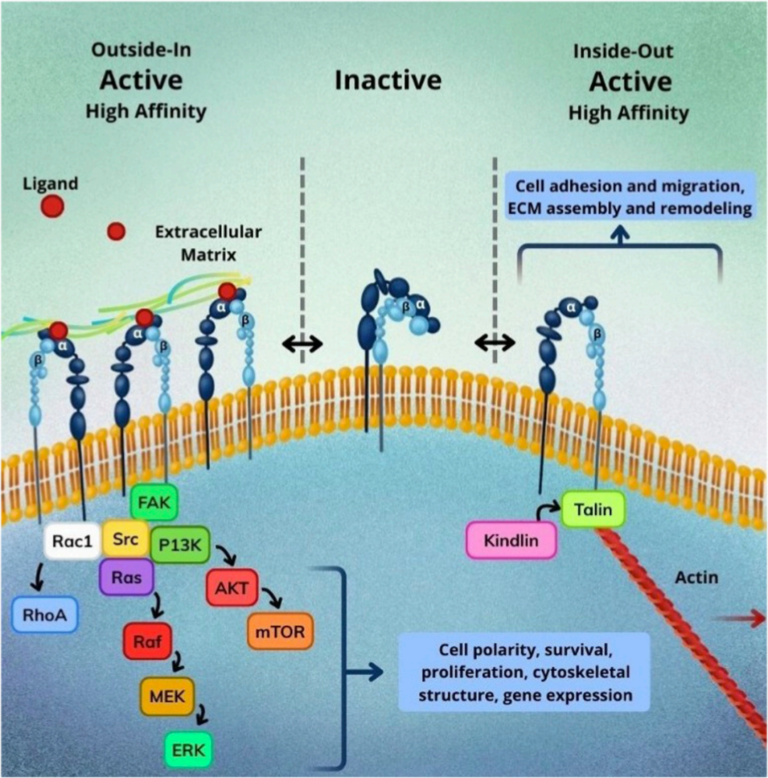
Enzymatic activity is unavailable in ITGA4. Heterodimer derived from β1 or β7 subunit establishes unique bidirectional signal transduction mechanism connecting extracellular environment and intracellular cytoskeleton. During transduction process, chemokines or antigens activate Rap1 and recruit adaptor proteins(e.g. Talin), promoting conversion of integrin extracellular domain from low-affinity bent conformation to high-affinity extended conformation, and further mediating rolling, firm adhesion and extravasation of leukocytes on vascular endothelium. Binding among integrin and ligands(e.g. VCAM-1) activates FAK and Src family kinase, further initiating downstream cascade: PI3K/AKT pathway drives recombination and migration of cytoskeleton; MAPK/ERK pathway inhibits apoptosis to maintain cell survival; Rho GTPase pathway regulates lamellipodia to support movement and invasion of cells.
3. Pathological Roles of ITGA4-Mediated Lymphocyte Trafficking and Tumor Metastasis
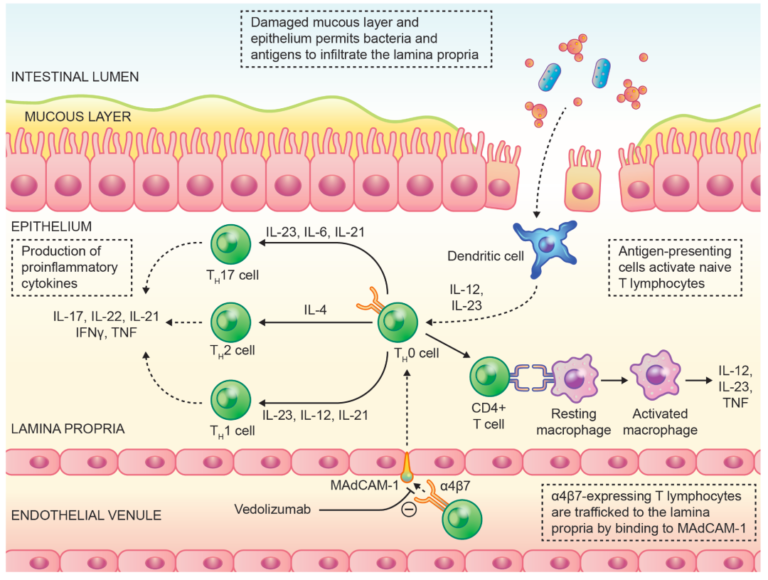
Dysfunction of ITGA4 is related to various diseases, especially for autoimmune diseases and tumors. In multiple sclerosis(MS), ITGA4 mediated-lymphocyte trafficking through blood-brain barrier (BBB) plays an important role in disease development. Effects of targeted therapy(e.g. Natalizumab) have been validated. In inflammatory bowel disease(IBD), heterodimer(α4β7)-induced homing of lymphocytes to intestinal mucosa aggravates inflammatory response, showing important roles in Crohn's disease and ulcerative colitis. Besides, abnormal expression of ITGA4 is also involved in development of various malignant tumors. In CLL (chronic lymphocytic leukemia), high expression of CD49D(ITGA4) on surface of T cells is related to prognosis. ITGA4/ITGB2 complex-promoted peritoneal metastasis in ovarian cancer highlights roles in tumor invasion and metastasis.
4. Targeted Therapy of ITGA4
Various ITGA4 targeted monoclonal antibody drugs have been developed. CD49D targeted Natalizumab was approved for treatment of multiple sclerosis and Crohn's disease in 2004. Drug development of α4β7 integrin is great. Vedolizumab is approved for inhibiting immunocyte migration via blocking interaction among α4β7 and MAdCAM-1. Recently, KEPLER test validates curative effects for UC patients over 2 years old. Abrilumab in phase IIb study obviously improves clinical remission rate of UC patients. Currently, Etrolizumab is in the phase III clinical trial, and focuses on treatment of IBD.
REFERENCES
[1]Hypermethylation‑induced silencing of ITGA4 promotes oral squamous cell carcinoma progression through SNX5 upregulation, PMID: 42028750.
[2]ITGA4 drives pathogenesis of flavivirus and inhibition of it protects mice against Japanese encephalitis virus infection, PMID: 42336219.
| Recombinant Proteins | |||
| Cat.No | Product Name | Host | Mol. Weight |
| P1679 | Recombinant Human ITGA4 | E.Coli | 48.4 kDa |
| P3364 | Recombinant Mouse ITGA4 | E.Coli | 55.5 kDa |
| Antibodies | |||
| Cat.No | Product Name | Host | Clonality |
| FNab04346 | ITGA4 antibody | Rabbit | polyclonal |