

Abstract: Interleukin-4(IL-4) is the pleiotropic cytokine mainly secreted by activated Th2 T-lymphocyte, also less produced by mast cells and basophils. IL-4 plays a key role in type II immune regulation, and development, differentiation and function of immune system, including driving differentiation of T-helper 2, IgE class switching in B cells and alternative macrophage activation etc. Deeper understanding of IL-4 signaling pathway promotes monoclonal antibody-targeted therapy.
Keywords: IL-4 Signaling Pathway, Targeted Therapy, Drug Effects, Autoimmune Diseases, Inflammation
1. Molecular Characteristics of IL-4 and Production
1.1. Molecular Structure and Receptor
IL-4 Molecule: Glycoprotein with the molecular weight 18-20 kDa, consisting of 4 α-helix bundles.
Receptor system: IL-4 takes effects via two different receptor complexes.
Type I receptor: Consist of IL-4Rα chain and common γ-chain. Common γ-chain is also found in receptors of IL-2, IL-7, IL-9, IL-15, IL-21. Thus, type I receptor mediated signal is partially overlapped.
Type II receptor: Consist of IL-4Rα chain and IL-13Rα1 chain. IL-4 and IL-13 can share some biological functions, explaining their similarities in allergic reaction.
1.2. Production of IL-4
CD4+ T Cell: Especially, naive T cell differentiates into Th2 cell via induction of IL-4 and effects of antigen and co-stimulatory signal.
Mast cell and basophil: Activation of IgE cross-linked FcεRI receptor can rapidly release a large number of pre-stored IL-4.
ILC2s(Type II innate lymphoid cells): Rapid response to alarmins(e.g. IL-25, IL-33) in tissue barriers(e.g. lung, intestine, and skin) produces IL-4, IL-5 and IL-13. ILC2s play an important in innate immune response.
Others: Eosinophil, T follicular helper(Tfh) and some dendritic cell subpopulations.
2. IL-4 Signaling Pathway
Binding between IL-4 and receptors mainly activate two classical signaling pathways:
2.1. JAK-STAT Pathway
JAK kinase: Activation of type I and II receptor recruits and activates Janus kinase family members, e.g. JAK1, JAK3.
STAT6: Janus kinase (JAK)-signal transducer and activator of transcription (STAT) 6. Phosphorylated STAT6 forms dimer, then transported to nucleus where its binding with specific sequence combination of target gene promoter area initiates transcription.
Key Functions: STAT6 is the most important and specific medium in IL-4 signaling pathway. The deficiency can result in functional loss of IL-4.
2.2. IRS-PI3K Pathway
Intracellular region of IL-4Rα chain can also recruit insulin receptor substrate and further activate phosphatidylinositol 3-kinase pathway(PI3K). Roles in cell survival, proliferation, and metabolism are significant.
3. Key Biological Roles of IL-4
3.1. Effects on B Cell
Class switch recombination: Switch IgM to IgE and IgG1(in mouse, IgG4 in human) via inducing B cell. Production of IgE is the key step during type I hypersensitivity.
Proliferation and survival: Promote proliferation and survival of B cell.
Expression of MHC class II molecules: Up-regulate expression of MHC class II molecules on B cell surface, improving antigen presenting ability.
3.2. Effects on T Cell
Promote differentiation of Th2 cell: IL-4 is the key cytokine driving differentiation of native CD4+ T cell into Th2 cell. This forms a positive feedback loop: Native T cell produces a little IL-4 and promotes the differentiation into Th2 cell. Mature Th2 cell produces a large number of IL-4, IL-5 and IL-13.
Inhibit differentiation of Th1/Th17 cell: Inhibit signal of IFN-γ and IL-12 via STAT6 signal, further inhibiting differentiation of Th1 and Th17 cell.
3.3. Effects on Macrophages
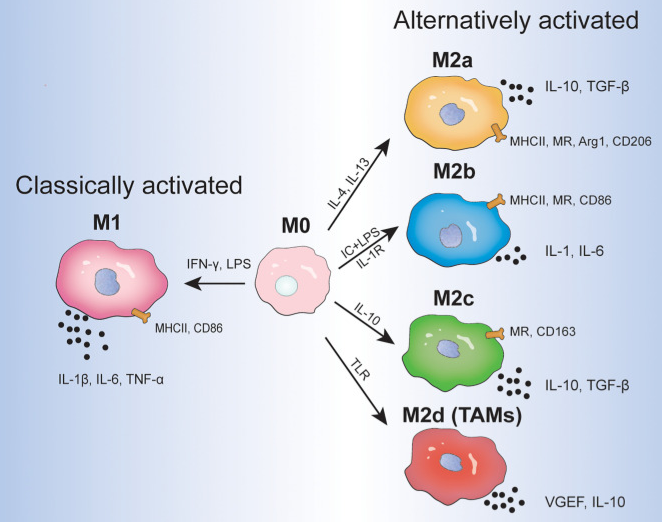
Alternative activation: IL-4(together with IL-13) induces the phenotypic polarization of macrophages to M2. M2 macrophages don't primarily produce pro-inflammatory factor and kill pathogens. Highly expressed argininase-1 and mannose receptor are involved in tissue repair, fibrosis and immune regulation.
3.4. Effects on Other Cells
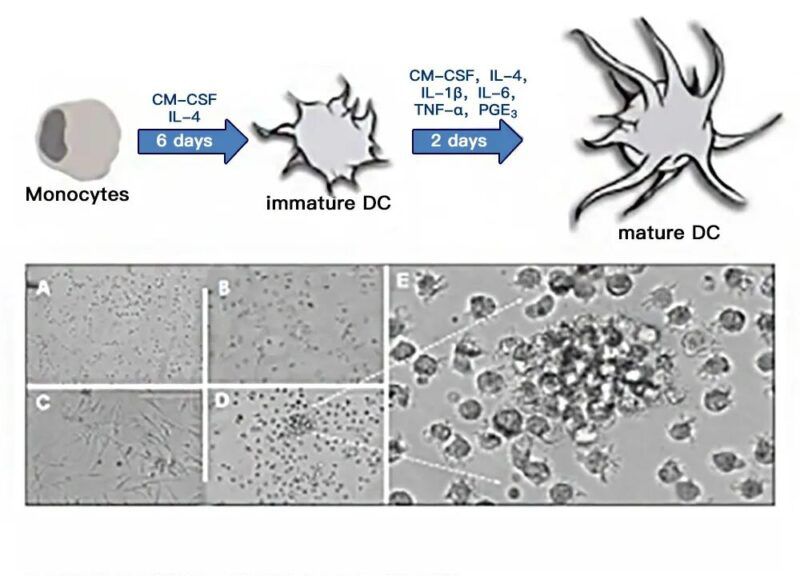
Dendritic cells(DC): IL-4 together with GM-CSF can induce the differentiation into dendritic cells.
Epithelial cells: Stimulate metaplasia of airway goblet cell and over-secretion of mucus.
Fibroblast: Promote collagen synthesis. Involved in tissue fibrosis process.
4. Physiological and Pathological Roles of IL-4
4.1. Physiological Roles
Anti-parasitic immunity: Type II immunity driven by IL-4 plays an important role in removal of extracellular parasites. Mechanisms include: induction of IgE production; activation of eosinophil; promoted activation of M2 macrophage to isolate parasites; improved intestinal smooth muscle contraction to excrete parasites.
Tissue Repair and homeostasis: roles of M2 macrophages in wound healing and tissue repair are fulfilled via growth factor production and matrix remodeling enzyme.
4.2. Pathological Roles
Allergic disease: IL-4 is one of the main inducers for allergic reaction.
Asthma: Drive airway hyperreactivity, mucus over-secretion, eosinophil infiltration and IgE production.
Atopic Dermatitis: Involved in skin inflammation, impairment of barrier function and increased IgE.
Allergic Rhinitis: Promote inflammatory response of nasal mucosa.
Fibrotic disease: In systemic sclerosis, idiopathic pulmonary fibrosis etc, IL-4 promotes activation of fibroblasts and polarization of M2 macrophage to result in excessive deposition of collagen and tissue fibrosis.
4.3. Dual Roles in Tumor
Tumor Enhancement: In tumor microenvironment, IL-4 can promote formation of M2 tumor-associated macrophages(TAMs). TAMs inhibit anti-tumor immunity to promote angiogenesis and tumor growth. Some tumor cells express IL-4R. IL-4 can act as an autocrine growth factor.
Anti-tumor potential: In some situations, IL-4 can improve activity of T and NK cell, and establish CAR-T therapy targeting IL-4R.
5. Clinical Significance and Applications
5.1. Therapeutic Target
Targeting IL-4/IL-13 pathway is the important treatment strategy for allergic disease.
Dupilumab: a IL-4Rα targeted monoclonal antibody can simultaneously block signal of IL-4 and IL-13. Dupilumab has been successfully applied in treatment of atopic dermatitis, asthma and chronic sinusitis with nasal polyps.
Others: Drugs targeting IL-4, IL-4R or downstream signaling molecules(e.g. JAK inhibitor) are still in development.
5.2. Diagnostic Markers
IL-4 level in serum, Th2-associated gene expression profile or phosphorylated STAT6 level is potential biological marker, evaluating activity of allergic diseases or specific tumor prognosis.
5.3. Applications in Immunotherapy
IL-4 in cells cultivated in vitro can induce differentiation of specific immune cell subpopulation. Modifications based on IL-4 tumor vaccine and CAR-T therapy have been in the exploration.
6. Conclusion
Roles of IL-4 in immune system regulation are indispensable. On one hand, IL-4 is required by body defense against parasites and tissue repair. On the other hand, dysfunction directly results in severe diseases, e.g. allergy, fibrosis.
Future researches include: More accurate analysis for contributions of cell-derived IL-4 to specific diseases; Develop highly efficient and specific IL-4 pathway inhibitor; Explore for combined therapy(e.g. immune checkpoint inhibitors).
Deeper investigation on new functions of IL-4 in metabolism, neuroimmunity and non-immune system. Above all, researches on IL-4 provide valuable opinions for understanding immune homeostasis and new therapies development.
| Cat.No | Product Name | Tag |
| P4505 | Recombinant Human IL-4 | N-terminal His Tag |
| Pr10143 | Recombinant Human IL-4 | C-terminal His Tag |
| Pr22190 | Recombinant Human IL-13 | C-terminal His Tag |
| P9778 | Recombinant Human IL-13 | C-terminal hFc-His Tag |
| Pr22572 | Recombinant Human IL-4 RA | C-terminal His Tag |
| P8665 | Recombinant Human GM-CSF | C-terminal His Tag |
| Pr10142 | Recombinant Mouse IL-4 | C-terminal His Tag |
| P4879 | Recombinant Mouse IL-13 | C-terminal His Tag |
| Pr22529 | Recombinant Mouse IL-4RA | C-terminal hFc Tag |
| P9321 | Recombinant Mouse GM-CSF | C-terminal His Tag |
REFERENCES
[1]STK11 coordinates IL-4 signaling with metabolic reprogramming to control M2 macrophage polarization and antitumor immunity, PMID: 41004572.
[2]IL-4-JAK1-STAT6 Pathway Mediates Electroacupuncture's Effect on Microglial M2 Polarization to Treat Inflammatory Bowel Disease With Comorbid Depression, PMID: 40823702.