


Abstract: Interleukin-12(IL-12) is mainly produced by monocyte macrophages. IL-12 promotes differentiation of helper T cell into Th1 cell with antitumor activity, and inhibits tumor promotion of Th2 cytokines via improving IFN-γ production and cell immune. IFN-γ mediated anti-angiogenesis plays an important role in immune regulation and antitumor. Roles of IL-12 family members(e.g. IL-12, IL-23, IL-27, IL-35 etc) are different, regulating immune balance and disease process together.
Keywords: Roles of IL-12, Immune Regulation, Antitumor, Autoimmune Diseases, Inflammation
1. Regulation of IL-12 Expression
IL-12 is mainly synthesized by antigen induced-antigen presenting cell. Production of various immune signals(e.g. regulation of TNF-α, IL-1β and IFN-γ etc) forms positive feedback loop, promoting continuous synthesis of IL-12 to initiate adaptive immune response. IL-12 signaling pathways are involved in TLR, CLR, JAK-STAT and PI3K/Akt etc. TLR activates MyD88 and TRIF dependent-pathway via recognizing pathogen-associated molecular patterns, promoting differentiation of Th1 and IFN-γ production to form positive feedback loop. PI3K/Akt pathway bidirectionally regulates IL-12 production, maintaining balance of inflammatory response.
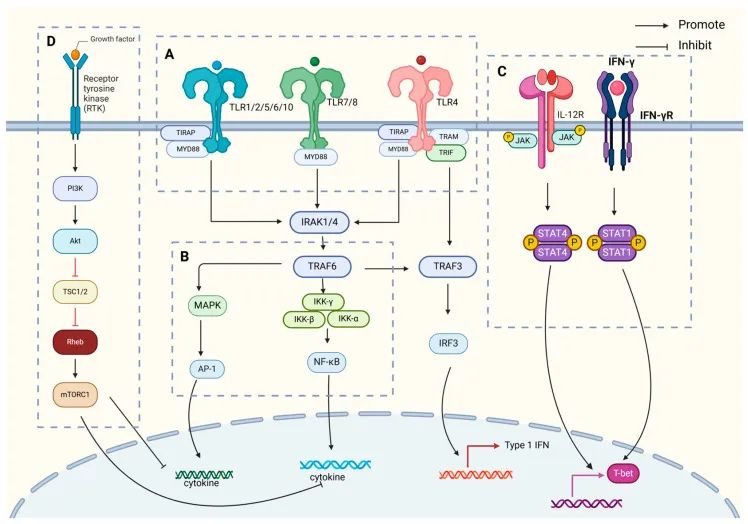
Synthesis and activity of IL-12 are regulated by various positive and negative regulators. Negative regulators weaken the function via inhibiting IL-12 production, preventing signal transduction or competitive binding of costimulatory molecules. Positive regulators promote production and immune response via activation of signaling pathway, promoted gene transcription and improved cell-cell interaction.
2. Immune Regulation by IL-12
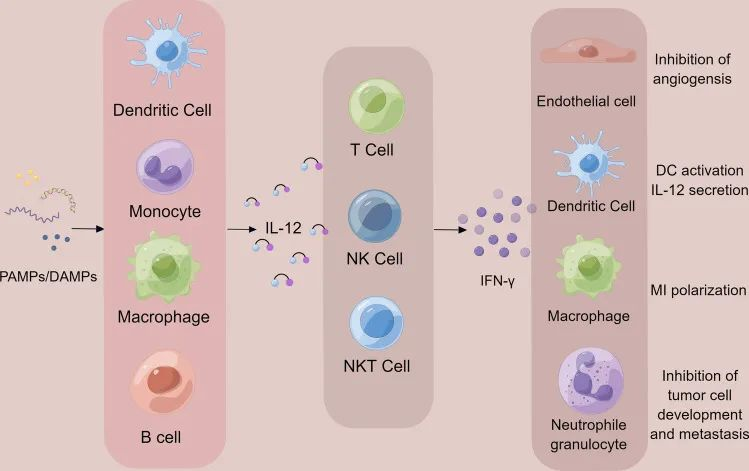
Roles of IL-12 in immune regulation are very important, including promoted differentiation and proliferation of Th1 cell, improved NK activity and cytotoxicity, enhanced phagocytosis and sterilization of macrophage, activated cytotoxic T lymphocyte(CTLs) for memory formation etc. IL-12 also promotes secretion of IFN-γ, granzyme and perforin, induces apoptosis of cancer cells, and inhibits tumor growth. Improvement and promotion of IL-12 are involved in antigen presentation, polarization of M1 macrophages and tumor microenvironment etc. Inhibiting function of regulatory T cell(Treg) can reduce immune suppression. Protection of tumor-infiltrated CD8+ T cell can improve antitumor immunity. Dose-related toxicity in IL-12 treatment may cause immune related-adverse reactions, e.g. hematological and liver injury, influenza-like symptoms.
3. Roles of IL-12 in Various Diseases
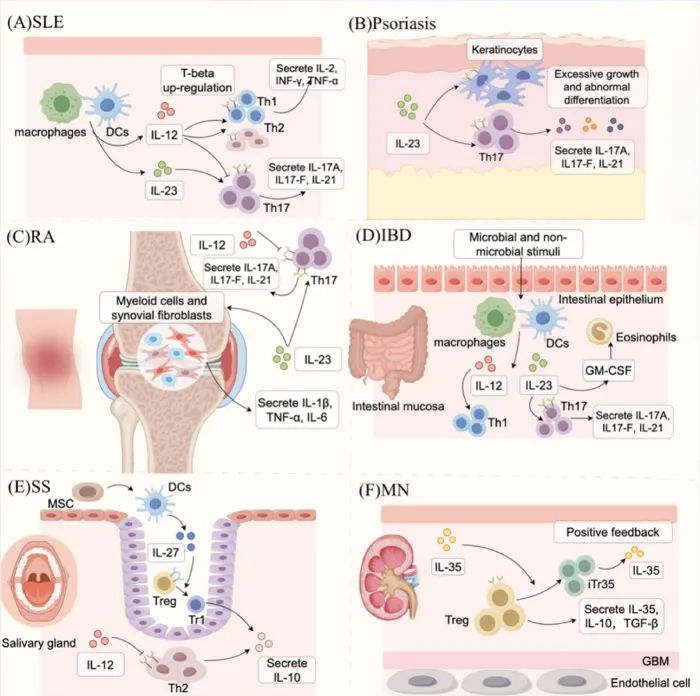
Roles of IL-12 in various autoimmune and inflammatory diseases are very complex. IL-12 and IL-23 are involved in the development of inflammatory bowel disease. Treatments targeting them show curative effects. The level of IL-12 in multiple sclerosis patients increases. Effects of clinical trials are limited. IL-12 in psoriasis is relevant to Th1 cell. Functions of Th1 cell are more important. IL-12 inhibits the occurrence of type 1 diabetes, and promotes potential treatment. IL-12 level in systemic lupus erythematosus and Sjögren's syndrome patients increases. Polymorphism of relevant genes is obvious. IL-12 is targeted in some therapies. Roles of IL-12 in rheumatoid arthritis are controversial. Correlation with the disease still shows no specific therapies.
4. Drug Development of IL-12
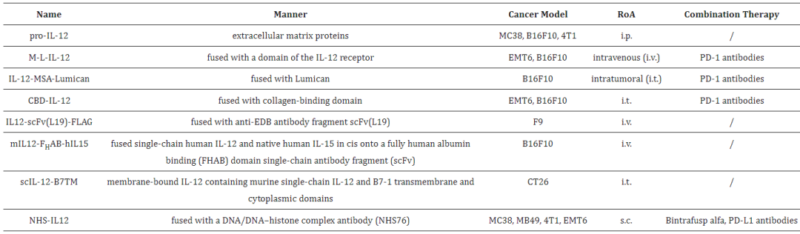
IL-12 modification in protein engineering can reduce toxicity and improve targeting for tumor microenvironment. Fusion between IL-12 and antibodies(e.g. NHS-IL12, huBC1-IL12) targeting TME antigen shows good effects in animal model. However, clinical performance is restricted. Fusion with Fc fragment of IgG can extend half life and improve curative effects. Binding with cleavable peptide of tumor protease can reduce systemic toxicity.
Using IL-12 in adoptive cell therapy(ACT) can improve curative effects in solid tumor, e.g. expression of IL-12 by genetically modified TCR-T or CAR-T cell, transfection of T cell via IL-12-mRNA, IL-12 anchored CAR-T cell membrane etc. Selection of tumor antigen and toxicity still remain to be resolved. Deeper investigation of IL-12 gradually shows the therapeutic potential in tumor and autoimmune diseases, providing novel approaches for treatment.
5. Recommended Products
| Cat.No | Product Name |
| Pr22613 | Recombinant Human IL-12B |
| Pr22614 | Recombinant Human IL-23P1781 |
| P1781 | Recombinant Human IL-23A |
| Pr22223 | Recombinant Human IL-23R |
| P9992 | Recombinant Human IL-27 |
| Pr22669 | Recombinant Mouse IL-12 |
| Pr22668 | Recombinant Mouse IL-12B |
| Pr23136 | Recombinant Mouse IL-23 |
| P10078 | Recombinant Mouse IL-23A |
| Pr23023 | Recombinant Mouse IL-23R |
| P3449 | Recombinant Mouse IL-27 |
| P6166 | Recombinant Mouse IL-27A |
| Pr23207 | Recombinant Rat IL-12 |
| Cat.No | Product Name |
| FNab04218 | IL12A antibody |
| FNab04219 | IL12B antibody |
| FNab04256 | IL23A antibody |
| FNab04259 | IL23A antibody |
| FNab10921 | IL27RA antibody |
REFERENCES
[1]Local delivery of IL-12 mRNA and indoximod prodrug potentiates antitumor immunity by increasing T cell effector function, PMID: 40541741.
[2]Exploring the role of the IL-12/IFN-γ immune axis in subacute sclerosing panencephalitis, PMID: 39955927.