


Abstract: Hepatocyte-derived PCSK9(Proprotein convertase subtilisin/kexin type 9) is the important target for lipid-lowering drugs, also expressed in small intestine, renal interstitial cells and neuron. PCSK9 is not only closely related to autosomal dominant hypercholesterolemia. Important roles in regulating lipid metabolism in vivo also affect development of atherosclerosis and coronary heart disease. Thus, PCSK9 becomes the hot target in preventing cardiovascular disease and cholesterol level reduction.
Keywords: PCSK9, Lipid Lowering, Lipid Metabolism, Hypercholesterolemia, Targeted Drugs, Cholesterol Reduction
1. PCSK9 Structure
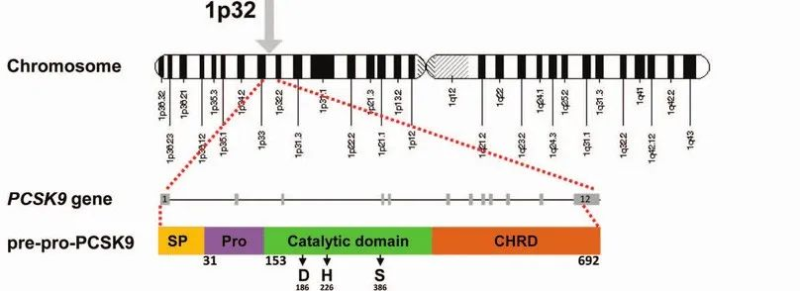
PCSK9 consists of signal peptide, prodomain, catalytic domain and C-terminal CHRD. Zymogen is cleaved into active fragment(about 60 kDa) via the autocatalysis of endoplasmic reticulum. PCSK9 binds with EGF-A of LDLR via catalytic domain. CHRD domain is very important for inducing LDLR degradation, further regulating cholesterol metabolism.
2. Physiological Function of PCSK9
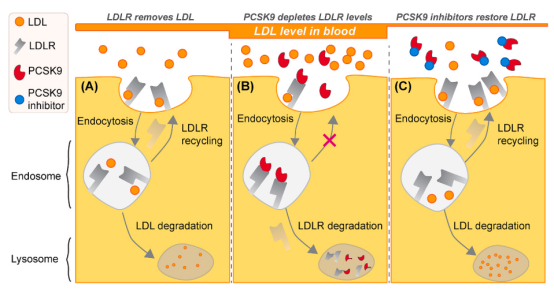
PCSK9 is mainly expressed in hepatic endoplasmic reticulum and vesicles, also found in tissues like intestinal, renal and vascular smooth muscle. Binding with LDL-R on the hepatocyte surface promotes LDLR degradation in lysosome and reduces recycling. Inhibition of removal of LDL-C causes increased LDL-C level in the blood. Genetic researches show enhanced PCSK9 and mutation can increase LDL-C level and cardiovascular risk. Dysfunction-induced mutation obviously decreases LDL-C level. Obvious adverse effects are absent, presenting inhibition of PCSK9 can efficiently lower lipid. Reliable safety shows significance of PCSK9 in hypercholesterolemia treatment.
3. Potential Therapeutic Target of Various Diseases
Roles of PCSK9 in cardiovascular disease, liver disease, infection, autoimmune disease, cancer are important. In cancer immunotherapy, knockout of PCSK9 gene in mouse cancer cells can inhibit tumor growth. Various inflammatory factors up-regulate expression of PCSK9, promoting development of cardiovascular diseases like atherosclerosis.
4. PCSK9 Inhibitors in Development
PCSK9 inhibitors are suitable for stable or progressive hypercholesterolemia patients with ASCVD or LDL-C level ≥4.90 mmol/L(e.g. HeFH, HoFH and polygenic hypercholesterolemia) and statin-intolerant high-risk population. PCSK9-mediated LDLR degradation prevents LDL-C removal in liver, resulting in dyslipidemia, atherosclerosis and coronary heart disease etc. Statins are widely applied but may increase PCSK9 level to restrict curative effects. PCSK9 inhibitors take effects via different mechanisms: Monoclonal antibodies can block binding between PCSK9 with LDLR. Antisense oligonucleotide or siRNA inhibits expression of PCSK9; Small peptides induce allostery and inactivation of PCSK9. Human monoclonal antibodies by subcutaneous injection can obviously decrease LDL-C level, stabilizing and even reversing atherosclerotic plaque. Decreased risk of cardiovascular events provides safe and effective therapy for high-risk patients.
5. PCSK9 Targeted Drugs
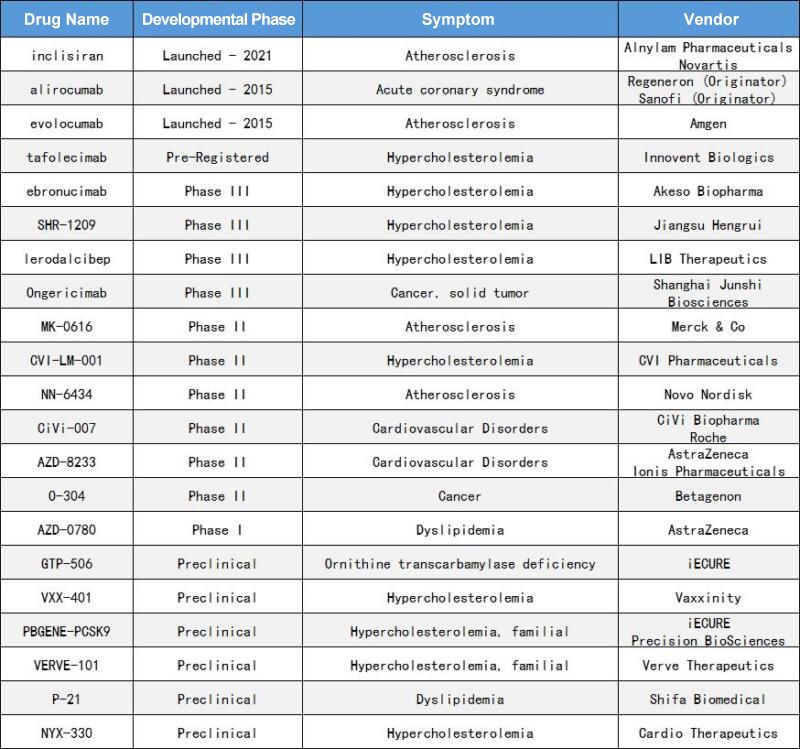
After statins, PCSK9 has been the target for highly-effective lipid lowering. Currently, three PCSK9 targeted drugs have been approved. Many relevant drugs are being developed for clinical trials, e.g. lerodalcibep, Bococizumab etc. In the coming years, PCSK9 targeted drugs will obviously increase.
| ELISA Kits | ||
| Cat.No | Product Name | Sensitivity |
| EH0251 | Human PCSK9 ELISA Kit | 0.375ng/ml |
| QT-EH0251 | Human PCSK9 QuickTest ELISA Kit | 0.375ng/ml |
| EM0153 | Mouse PCSK9 ELISA Kit | 9.375pg/ml |
| QT-EM0153 | Mouse PCSK9 QuickTest ELISA Kit | 9.375pg/ml |
| ER0134 | Rat Pcsk9 ELISA Kit | 9.375pg/ml |
| QT-ER0134 | Rat Pcsk9 QuickTest ELISA Kit | 9.375pg/ml |
| Recombinant Proteins and Antibodies | ||
| Cat.No | Product Name | Host |
| P2705 | Recombinant Human PCSK9 | E.Coli |
| Pr22987 | Recombinant Mouse PCSK9 | Mammalian Cells |
| FNab06227 | PCSK9 antibody | Rabbit |
REFERENCES
[1]Efficacy and Safety of Oral PCSK9 Inhibitor Enlicitide in Adults With Heterozygous Familial Hypercholesterolemia: A Randomized Clinical Trial, PMID: 41206969.
[2]An Oral PCSK9 Inhibitor for Treatment of Hypercholesterolemia: The PURSUIT Randomized Trial, PMID: 40167413.
[3]Cholesterol metabolic reprogramming mediates microglia-induced chronic neuroinflammation and hinders neurorestoration following stroke, PMID: 40987840.