


Abstract: In recent years, researches on Trop2(trophoblast cell surface antigen 2) are greatly concerned. As the type I transmembrane glycoprotein, trop2 expression in various solid tumors and normal tissues is higher and lower respectively. Trop2 is also involved in embryonic development. The over-expression is closely associated with proliferation, invasion and metastasis of tumors, obviously affecting the disease progression. Thus, trop2 is considered as the important prognostic marker and potential tumor treatment target.
Keywords: Trop2 Expression, Trop2 signaling pathway, Targeted therapy, Cancer treatment
1. Structure of Trop2
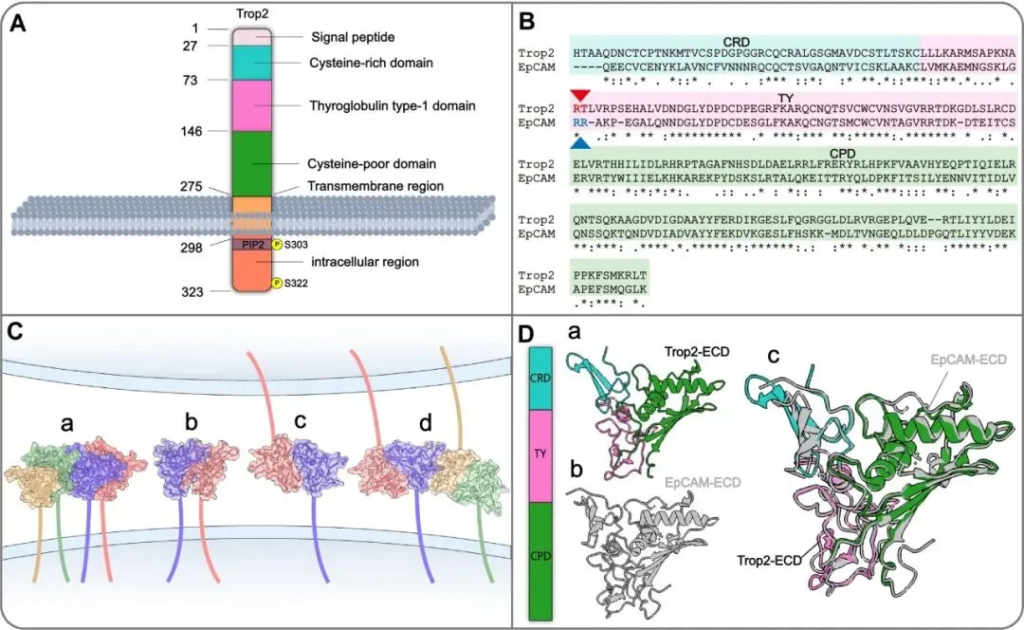
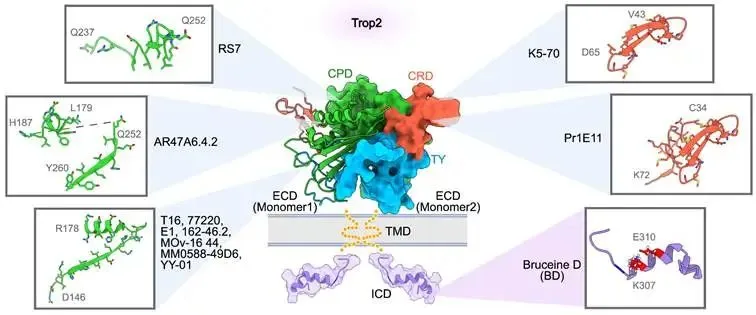
Trop2 consists of signal peptide, extracellular domain(ECD), transmembrane region and cytoplasmic tail. ECD includes CRD, CPD and TY structural domain, involved in disulfide formation; Intracellular region includes PIP2 binding sequence and phosphorylation site, regulating cell cycle. Trans-dimer is mediated by CPD. Cis-dimer is mediated by TY and CPD, showing stronger interaction. Homogeny with EpCAM still shows differences in glycosylation, hydrolytic site and signal transduction. Mechanisms of functional assembly are also different.
2. Trop2 Expression in Solid Tumors
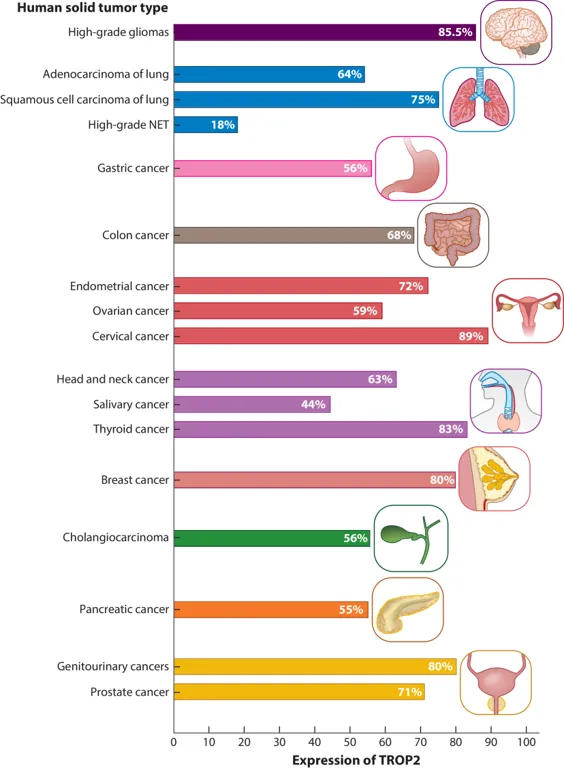
Trop2 expression in various solid tumors is high, especially for triple-negative breast cancer(TNBC, 78%), non-small-cell-lung-cancer(adenocarcinoma: 64%, squamous cell cancer: 75%), cervical squamous carcinoma(89%) and endometrial cancer(72%). A lot of researches show high expression of Trop2 is closely related to strong tumor invasiveness, high risk of recurrence, shorter overall and disease-free survival. Trop2 is the important biomarker of poor prognosis. Expression in normal tissues is lower, restricted to epithelial cells like skin, cornea, respiration etc. Expression differences among tumor and normal tissues enable the potentiality of Trop2 in targeted therapy, also providing sound theoretical basis for new therapies like antibody-drug conjugate(ADC).
3. Trop2 Signaling Pathway
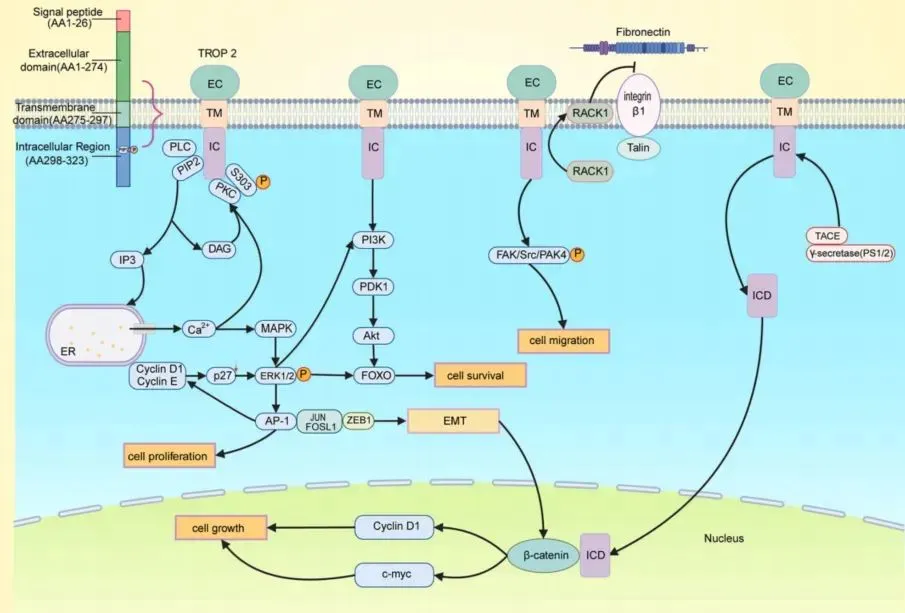
Trop2 promotes tumor development via multiple signaling pathways: Activated PKC triggers calcium signal, promoting cell proliferation via MAPK; Inhibition of FOXO via PI3K-Akt inhibits apoptosis. Nuclear translocation of intracellular domain(ICD) coordinates with β-catenin to up-regulate oncogenes to drive EMT, e.g. cyclin D1, c-myc etc. Besides, activation of integrin β1/FAK/Src axis improves cell migration and metastasis, promoting tumor progression in an all-round way.
4. Trop2-targeted Drug
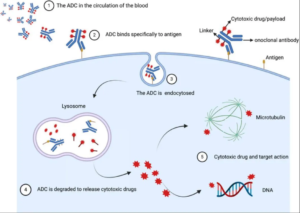
Currently, trop2-targeted drugs focus on breast cancer and lung cancer. Antibody-drug conjugates(ADC) are mostly used, including Sacituzumab govitecan for TNBC, urothelial carcinoma and HR+/HER2 breast cancer; Sacituzumab tirumotecan for TNBC and EGFR-mutated non-small cell lung cancer(NSCLC). Besides, various Trop2 ADCs have been in the clinical trial, e.g. Dato-DXd, SHR-A1921 etc.
4.1. Trop2-targeted Monoclonal Antibody Drug

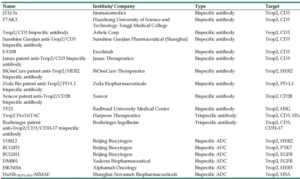
4.2. Trop2-targeted Multi-specific Drug
4.3. Trop2-targeted Cancer Vaccine
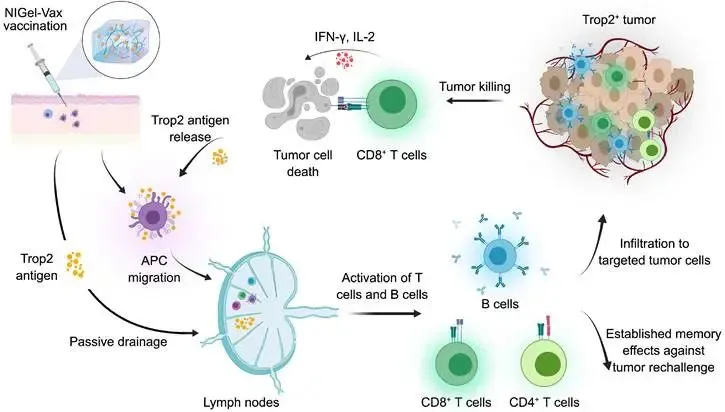
Trop2 vaccine based on virus-like particles(VLPs) can efficiently activate immune response and regulate tumor microenvironment. Combination chemotherapy obviously extend the survival of tumor-bearing mice. Nanogel vaccine NIGel-Vax shows strong anti-tumor activity in a postoperative breast cancer model. Obviously inhibited recurrence achieves high cure rate, and induces long-lived immune memory, showing potentiality in metastasis prevention and recurrence.
4.4. Trop2-targeted Small Molecule Inhibitor
Bruceine D is the only known Trop2 small molecule inhibitor, specifically binding with Trop2 intracellular domain(ICD). Interference with signaling pathways(e.g. e.g. PI3K/Akt, MAPK) inhibits tumor invasion and metastasis. Preliminary researches reveal its anti-metastatic potential. But deeper investigations on precise binding site, mechanisms and pharmacokinetics are still required to promote clinical translation.
5. Conclusion
Trop2 is the important potential target for various tumors. Its mechanisms in different cancers are complex. In the future, further analysis of carcinogenic pathways, development for safe and effective targeted drugs and optimization of therapeutic strategy are required. Besides, exploration of Trop2 potentiality in molecular imaging and theranostics can promote precise diagnosis and efficacy monitoring. Expansion of clinical values in more tumors achieves therapeutic breakthrough.
| Recombinant Proteins | |||
| Cat No. | Product Name | Host | Mol. Weight |
| Pr22455 | Recombinant Human TROP-2 | Mammalian Cells | 60-80 kDa |
| Pr22456 | Recombinant Human TROP-2 | Mammalian Cells | 40-50 kDa |
| Pr22457 | Recombinant Human TROP-2 | Mammalian Cells | 28-40 kDa |
| Pr22458 | Recombinant Human TROP-2 | Mammalian Cells | 60-80 kDa |
| Pr23003 | Recombinant Mouse TROP-2 | Mammalian Cells | 38-55 kDa |
REFERENCES
[1]Inter-Assay Variability of TROP2 Immunohistochemistry in Triple-Negative Breast Cancer, PMID: 40914741.
[2]Prognostic relevance of TROP2 expression in patients with non-small cell lung cancer receiving immunotherapy, PMID: 41073519.