


Abstract: Serum amyloid P component(APCS/SAP/PTX2) is the important family member of pentameric protein. As the calcium dependent lectin, it can interact with various molecules(e.g. DNA, histone, apoptotic debris etc), helping to remove nuclear substance released by damaged cells. In vitro experiments employing recombinant proteins and antibodies validate sensitive roles of SAP in diagnosis and treatment of various immune-mediated diseases(e.g. amyloidosis, fibrosis and cardiovascular diseases etc). Besides, as the key immunoregulatory factor, binding with bacterial polysaccharides, amyloid deposits and viral proteins enable the involvement in innate immune regulation.
Keywords: serum amyloid P component, Immune Disorder, Immunoregulation, Metabolism, Pentraxins, Targeted Therapy
1. Biological and Clinical Aspects of APCS
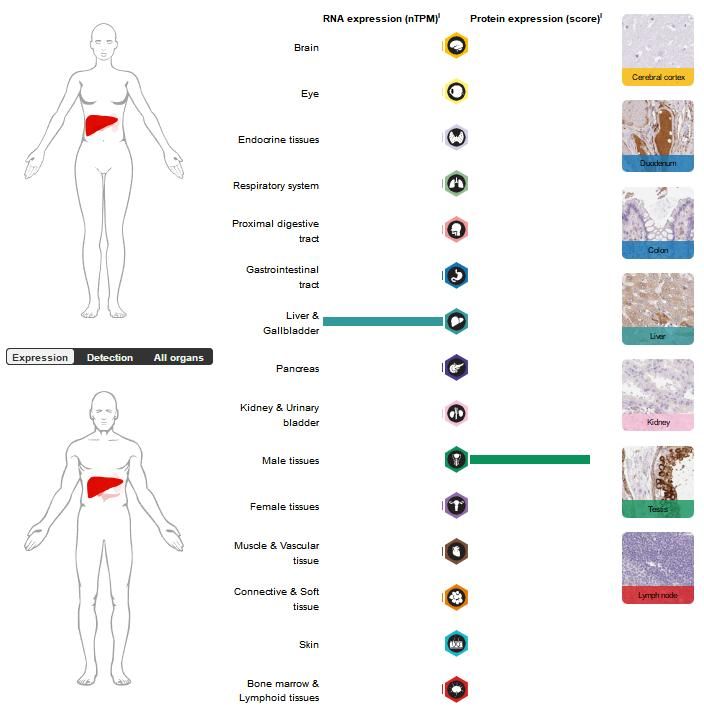
APCS is mainly synthesized by hepatocytes and distributed in liver tissue. Pathological states enable specific enrichment in amyloid deposition site. APCS binds with DNA, histone and apoptotic debris, assisting in elimination of nuclear substance released by injured cells. Besides, it’s the sensitive biomarker for various immune-related diseases(e.g. amyloidosis, fibrosis and cardiovascular diseases etc), acting as a immunoregulatory factor to be involved in innate immune response.
2. In Vitro Binding Properties and Receptor Recognition of APCS
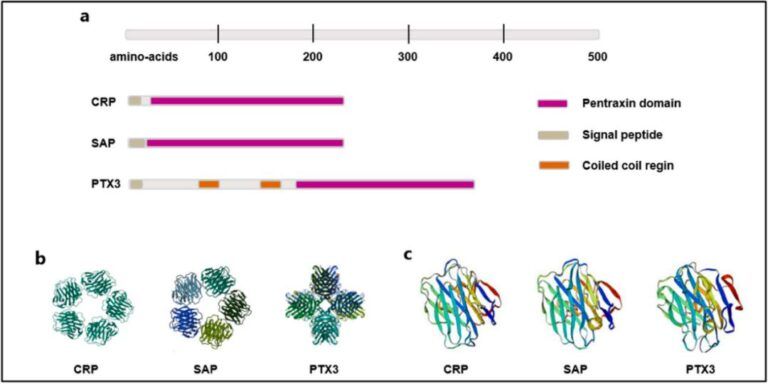
APCS is the secreted protein. Its monomer consists of 223 amino acids and five subunits with the same molecular weight(about 25 kDa). These subunits form highly stable ring-shaped pentamer structure. Each subunit contains a pentraxin conserved domain, forming a universal ligand binding platform. Unique flat β micellar structure grants the calcium-dependent ligand binding ability. In both sides of pentameric disk, short α helix and five dual calcium sites mediate ligand binding. The C-terminal domain can bind with FcγR(e.g. FcγRI or FcγRIII) on immunocyte surface, inducing immune effects of downstream. This molecular interaction process usually conducts in vitro binding assay with recombinant proteins and antibodies.
3. APCS-Mediated Immune Activation via FcγR Cross-Linking
APCS-FcγR binding induces immune response of downstream via classical ITAM signaling pathway. After binding, pentamer structure cross-links with FcγR on the cell membrane, leading to Src family kinases induced phosphorylation of ITAM motif within receptor's intracellular domain. Phosphorylated ITAM recruits and activates Syk kinase, further initiating multiple downstream signaling cascades(e.g. PLCγ, PI3K-Akt and MAPK). The activation of these pathways induce production of various effector functions by immunocytes, including remodeling of actin cytoskeleton mediated phagocytosis; removal of targets regulated by APCS; release of perforin and granzyme by activating effector cells(e.g. NK cell); exertion of antibody-dependent cell-mediated cytotoxicity(ADCC); promoted release of pro-inflammatory cytokines. The final effect intensity of this process depends on signal balance among activated FcγR and inhibited ITAM-bearing FcγRIIB, thus accurately regulating immune response.
4. Diverse Roles of SAP in Immunity, Metabolism, and Pathology
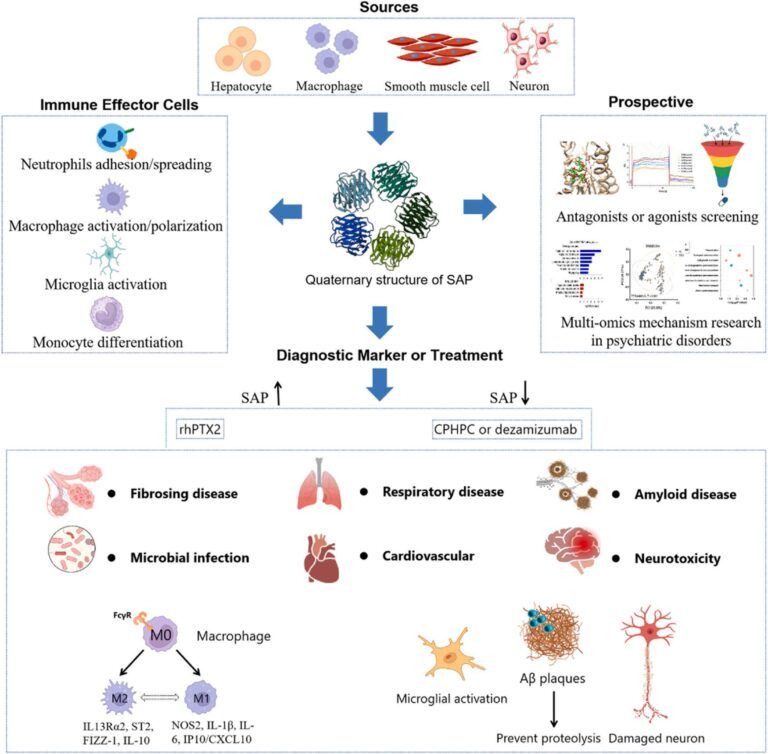
SAP is the multifunctional immune regulatory protein. Calcium-dependent binding with ligands(e.g. DNA, chromosome and apoptotic debris) removes substances produced by cell death or tissue damage. Besides, binding with high-density lipoprotein(HDL) and very low-density lipoprotein(VLDL) indicates involvement in lipoprotein metabolism. Interaction with complement system and FcγR(e.g. FcγRI/III) shows immunoregulatory roles of SAP are very important: adhesion decrease of neutrophil, activation and polarization regulation of macrophages, improved phagocytosis for cellular debris, differentiation inhibition of fibrocytes. Thus, SAP is significant in pathogenesis and treatment of various diseases(e.g. fibrotic diseases, amyloidosis, cardiovascular diseases, neuropsychiatric disorders, respiratory diseases and microbial infections etc).
5. Targeted Therapy of APCS
Dezamizumab(GSK2398852) is the APCS targeted monoclonal antibody from GSK and can interfere with inflammatory related diseases. Early screening and in vitro functional validation of these targeted antibodies depend on basic experimental materials(e.g. standardized recombinant proteins, antibodies). This antibody specifically binds with SAP protein to block the interaction with amyloid fibrils, promoting removal of amyloid fibrils and repair of organs. Dezamizumab during Phase 1 clinical trial shows better safety, effectively removing amyloid deposition in liver, spleen, and kidneys. However, GSK terminated the Phase 2 clinical trial(NCT03044353) and related development in 2019. The experiment planned to estimate drug-mediated reduction of cardiac amyloid load via CMR.
|
Recombinant Proteins and Antibodies |
|||
|
Cat.No |
Product Name |
Host |
Mol. Weight/Clonality |
|
Recombinant Human APCS |
E.Coli |
25 kDa |
|
|
APCS antibody |
Mouse |
monoclonal |
|
|
APCS antibody |
Rabbit |
polyclonal |
|
REFERENCES
[1]Serum amyloid P secreted by bone marrow adipocytes drives skeletal amyloidosis, PMID: 40730660.
[2]Induction of neurodegeneration in the hippocampus of senescence-accelerated mouse-prone 8 (SAMP8) mice by blood-brain barrier-crossing serum amyloid P component, PMID: 41559706.
[3]In Murine Disseminated Candidiasis, Serum Amyloid P Component Inhibits Inflammation and C-Reactive Protein Potentiates Inflammation, PMID: 42075763.