


Abstract: Atherosclerosis is the chronic vascular disease induced by deposited substances(e.g. fat and cholesterol in artery wall). Formed plaque stiffens and narrows artery to block blood flow. Causes of atherosclerosis development are complex. The inflammation indicates important roles of inflammatory cells and factors.
Keywords: Atherosclerosis, Chronic Vascular Disease, Inflammation, Plaque
1. Risk Factors in Atherosclerosis
Risk factors include high cholesterol, hypertension, smoking, diabetes, obesity, unhealthy diet, lack of exercise, excessive drinking, genetic factors, diversities of gender and age etc. Prevention of blood flow via fat deposition induced-plaque in artery wall greatly affects cardiovascular health. Control of these risks is very important for prevention of atherosclerosis and complications.
2. Pathogenesis of Atherosclerosis
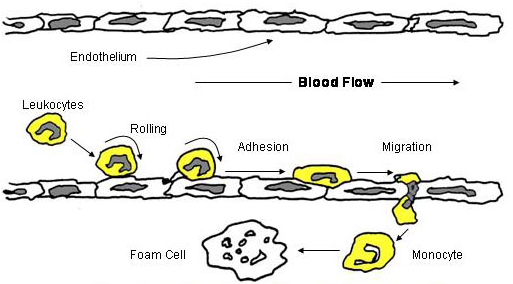
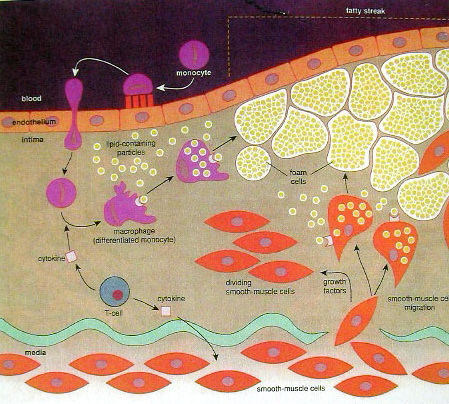
Complex pathogenesis of atherosclerosis is involved in various theories, e.g. fatty infiltration theory, response-to-injury theory. LDL-C passes through injured endothelium to enter internal membrane. Oxidized ox-LDL-C damages endothelial function further. Then, monocytes and lymphocytes are adhered on endothelium and migrate to internal membrane, transformed to macrophages further. Phagocytosis of ox-LDL-C via scavenger receptor forms foam cells and early fatty streak.
Macrophages can release various pro-inflammatory and growth factors, e.g. TNF-α, IL-1, PDGF and FGF, promoting inflammatory response and proliferation/migration of smooth muscle cells. Activated T cells secrete cytokines like IFN-γ to exacerbate lesion. Affected by various factors, smooth muscle cells migrate to internal membrane. Phagocytosis of lipid and involvement in synthesizing plaque and matrix promote conversion of fatty streak to fibrofatty lesion and fibrous plaque.
3. Complications of Atherosclerosis
Atherosclerosis can cause various serious complications, e.g. myocardial infarction, cerebral apoplexy, aneurysm and acute peripheral arterial occlusion etc. Plaque rupture easily forms thrombus to block blood flow, resulting in cardio-cerebrovascular events. Thinning of artery wall can form aneurysm. Rupture is life-threatening. Acute peripheral arterial occlusion may result in ischemia-induced limb necrosis.
4. Drug Treatment
Treatments of atherosclerosis include various drugs. First, for patients with dyslipidemia, statins are recommended to decrease TC and LDL-C. Some drugs can be also selected, e.g. Fibrates, Ezetimibe and PCSK9 inhibitor etc. Anti-platelet drugs can prevent thrombosis and vascular obstruction, e.g. aspirin, clopidogrel. Thrombolytic agents(e.g. streptokinase, alteplase) and anticoagulant drugs(e.g. heparin, warfarin and new oral anticoagulants) deal with thrombus induced stenosis or obstruction. Drugs for improving cardiac remodeling and prognosis include ACEI or ARB. Ischemic symptoms(e.g. angina pectoris) can be treated with nitrates and beta receptor antagonist. These drugs interact to decrease disease development and improve patients' prognosis.
5. Nanotechnology for Drug Delivery
Nano drug delivery system(nano-DDS) has high biocompatibility and targeting. Applications in atherosclerosis treatment include biomimetic particles, viral vectors, metal nanoparticles, polymer, dendrimer, liposome, micella etc. They can efficiently deliver drugs or contrast media to lesion site, e.g. macrophages or plaque area. Improved therapeutic effects can decrease systemic toxicity. Some systems can reduce lipid deposition and improve development of disease via blocking scavenger receptor.
Atherosclerosis is the important healthy issue. Understanding of pathogenesis, risk factors and symptoms helps early prevention. Regulation of life style, drug treatment and necessary surgery can efficiently control the disease. New techniques like nano-targeted therapy can provide new solution for intracranial lesions in the future. Patients can benefit a lot from medical advancements.
| Target | Antibodies | Recombinant Proteins | ELISA Kits |
| LDLR | LDLR antibody | LDLR recombinant protein | LDLR ELISA Kit |
| ACE2 | ACE2 antibody | ACE2 recombinant protein | ACE2 ELISA Kit |
| RETN | RETN antibody | RETN recombinant protein | RETN ELISA Kit |
| MCP-1 | MCP-1 antibody | MCP-1 recombinant protein | MCP-1 ELISA Kit |
| FSCN1 | FSCN1 antibody | FSCN1 recombinant protein | FSCN1 ELISA Kit |
| TNF-α | TNF-α antibody | TNF-α recombinant protein | TNF-α ELISA Kit |
| IL-6 | IL-6 antibody | IL-6 recombinant protein | IL-6 ELISA Kit |
| IL-1β | IL-1β antibody | IL-1β recombinant protein | IL-1β ELISA Kit |
| CRP | CRP antibody | CRP recombinant protein | CRP ELISA Kit |
REFERENCES
[1]Gut microbiota and derived metabolites mediate obstructive sleep apnea induced atherosclerosis, PMID: 40025767.
[2]cDC1s Promote Atherosclerosis via Local Immunity and Are Targetable for Therapy, PMID: 40444360.