


FineTest ELISA kit contributes to the research on rothia mucilaginosa treatment. The immunoassay is designed to measure heme level in supernatants.
Article Title: Rothia mucilaginosa membrane vesicles stabilize labile iron to alleviate UVB-induced ferroptosis
Journal Title: Cell Host & Microbe
DOI: 10.1016/j.chom.2025.12.008
IF: 18.7
PMID: 41500222
Abstract: Ultraviolet irradiation, particularly ultraviolet B (UVB), damages keratinocytes, potentially causing actinic cheilitis. Commensal bacteria help maintain barrier function and protect the host. However, it is unclear if commensal bacteria can protect the host from UVB irradiation. Here, we demonstrate that Rothia mucilaginosa (R. mucilaginosa)-derived membrane vesicles (RMVs) contain ferrochelatase, which stabilizes labile iron in host cells to alleviate UVB-induced ferroptosis. We demonstrate that R. mucilaginosa abundance on lip vermilion inversely correlates with actinic cheilitis severity in patients. Mechanistically, we find that UVB induces R. mucilaginosa to release RMVs, which are internalized by host cell lysosomes. The ferrochelatase contained within these RMVs catalyzes conversion of Fe2+ and porphyrin into heme, thereby alleviating UVB-induced iron overload and ferroptosis. Topical application of RMVs relieves actinic cheilitis in patients (ChiCTR, no. ChiCTR2500100015). Collectively, we reveal an iron stabilization mechanism through which commensal bacteria protect the host against UVB and expand our understanding of the relationship between commensal bacteria and hosts.
Keywords: Rothia mucilaginosa, actinic cheilitis, ferroptosis, iron metabolism, membrane vesicles, ultraviolet
Immunoassay
| FineTest Product | Sample | Species | Detection Target |
| Heme assay kit(EU2610) | supernatants | human | heme |
Validated Image
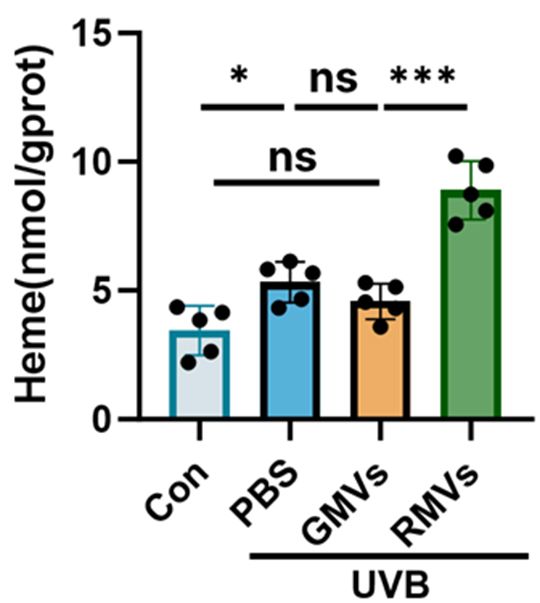
Figure Source: Cell Host Microbe. 2026 Jan 14;34(1):35-51.e9. doi: 10.1016/j.chom.2025.12.008.